Why Advanced Topics Demand Advanced AI: The Ensemble Architecture Revolution
Why Advanced Topics Demand Advanced AI: The Ensemble Architecture Revolution
When you ask ChatGPT to solve a derivative, it might give you an answer. But can it verify that answer is mathematically rigorous? Can it detect subtle errors in your reasoning? Can it adapt its teaching approach when you're stuck on the conceptual understanding versus computational mechanics?
The answer is no. And this reveals the fundamental problem with single-model AI for education: advanced topics require advanced AI architecture.The Single-Model AI Ceiling
Most AI tutoring platforms operate on a deceptively simple premise: take a powerful language model (like GPT-4 or Claude), give it some educational context, and let it answer student questions. This works reasonably well for basic topics—simple arithmetic, vocabulary definitions, historical facts.
But the moment you enter the realm of advanced subjects—multivariable calculus, quantum mechanics, linear algebra, organic chemistry, abstract mathematics—the cracks begin to show.
Why Simple AI Fails at Complex Subjects
1. No Mathematical VerificationA language model can generate mathematical solutions that look plausible but are fundamentally wrong. It might:
- • Miss edge cases in integration (improper integrals, discontinuities)
- • Apply theorems incorrectly (forgetting prerequisites or domain restrictions)
- • Make algebraic errors that propagate through multi-step solutions
- • Present "solutions" to problems that have no closed-form solution
Language models are trained to predict the next word based on patterns. For a physics problem involving projectile motion, the model might recognize the pattern "throw object → parabolic trajectory → kinematic equations" and spit out formulas.
But what if the question requires:
- • Choosing between different coordinate systems?
- • Recognizing when air resistance is negligible vs. critical?
- • Understanding why energy conservation applies in this scenario but not another?
- • Connecting calculus concepts (derivatives for velocity, integrals for displacement) to physical meaning?
Different students struggle with advanced topics for different reasons:
- • Student A understands the concept but makes computational errors
- • Student B can execute the algorithm but has no conceptual understanding
- • Student C has math anxiety and needs gradual scaffolding
- • Student D is ready for proof-based rigorous treatment
Advanced problems require chains of reasoning: "If this theorem applies, then we can use this technique, which transforms the problem into this form, where we apply this other method."
A single model generates this chain in one shot. There's no:
- • Verification that each step logically follows from the previous
- • Checking for alternative solution paths
- • Validation that assumptions made early on still hold later
- • Quality control on the pedagogical clarity of each step
Enter Ensemble AI: The Architecture for Advanced Learning
Ensemble AI architecture is fundamentally different. Instead of one model doing everything, multiple specialized AI agents collaborate, each an expert in a specific domain.
Think of it this way:
- • Simple AI = One teacher trying to be a mathematician, physicist, learning psychologist, fact-checker, and progress tracker simultaneously
- • Ensemble AI = A team of specialists, each world-class in their domain, working together in perfect coordination
The Didaxa Ensemble Architecture
When you work with Didaxa on an advanced topic, you're not talking to an AI—you're engaging with a coordinated educational intelligence network. Here's how it works:
Agent 1: The Conceptual Understanding Agent
Specialized in breaking down abstract concepts into intuitive understanding. When you're learning eigenvalues, this agent:
- • Identifies the conceptual core (transformation, invariant directions)
- • Generates multiple explanatory models (geometric, algebraic, physical)
- • Creates analogies tailored to your background
- • Detects common conceptual misconceptions
Agent 2: The Mathematical Verification Agent
A symbolic mathematics engine that ensures every calculation is rigorous. It:
- • Checks solutions for mathematical correctness
- • Validates that theorems are applied within their domain
- • Verifies algebraic manipulations step-by-step
- • Detects when a problem requires numerical vs. symbolic methods
Agent 3: The Pedagogical Strategy Agent
Analyzes how you learn and adapts the teaching approach. It:
- • Tracks where you get stuck (concepts vs. computation)
- • Identifies your optimal difficulty level (zone of proximal development)
- • Determines whether you need more examples, deeper theory, or practice problems
- • Sequences explanations from intuition → formalization → application
Agent 4: The Problem Decomposition Agent
Breaks complex multi-step problems into manageable sub-problems:
- • Identifies the logical structure of the problem
- • Determines which sub-problems must be solved first
- • Guides you through the solution architecture before diving into details
- • Ensures you understand why each step is necessary
Agent 5: The Cross-Domain Integration Agent
Advanced topics rarely exist in isolation. Calculus appears in physics. Linear algebra underlies quantum mechanics. Statistics uses calculus and linear algebra.
This agent:
- • Identifies connections between different subjects you're learning
- • Reinforces concepts by showing how they apply across domains
- • Builds a coherent knowledge graph instead of isolated facts
- • Makes learning cumulative and interconnected
How They Work Together: A Real Example
Scenario: You're studying vector calculus and ask: "How do I evaluate the surface integral of a vector field over a hemisphere?" Behind the scenes (in milliseconds): Problem Decomposition Agent analyzes:- • Problem type: Surface integral of vector field
- • Required concepts: Parametrization, normal vectors, dot products, double integrals
- • Prerequisites: Student should know line integrals, partial derivatives
- • Complexity: High—requires multiple conceptual and computational steps
- • You recently completed line integrals ✓
- • You struggled with parametrization last week ⚠️
- • You prefer visual/geometric intuition before formulas
- • Recommendation: Start with geometric setup, then parametrization guidance
- • Visual: hemisphere as a surface, vector field as arrows
- • Intuition: integral measures "flow through surface"
- • Key insight: need to parametrize surface to set up double integral
- • Standard parametrization: x=r·sin(φ)·cos(θ), y=r·sin(φ)·sin(θ), z=r·cos(φ)
- • Normal vector computation: ∂r/∂φ × ∂r/∂θ
- • Domain: φ ∈ [0, π/2], θ ∈ [0, 2π] for hemisphere
- • Prepares to verify student's work at each step
"Great question! Surface integrals can be tricky, so let's build this step by step. First, picture the hemisphere—imagine it as the top half of a sphere, and the vector field as a bunch of arrows pointing in various directions through space. We want to measure the 'total flow' through this curved surface.>
The key challenge here is parametrization—we need to describe every point on the hemisphere using two parameters. Remember spherical coordinates from last week? That's our tool here.>
Let's start: can you think about how we'd describe a point on a sphere using angles? Think about latitude and longitude on Earth."You respond: "Um, I think we use φ and θ? But I'm confused about which is which." Pedagogical Strategy Agent notes: Confusion about parametrization (as predicted). Provide visual aid and clarification. Response:
"Exactly right—φ (phi) and θ (theta) are our two angles! Think of θ as rotating around the z-axis (like longitude), and φ as the angle down from the north pole (like latitude, but measured from the top).>
Here's the key: every point on the hemisphere can be written as:
- x = r·sin(φ)·cos(θ)
- y = r·sin(φ)·sin(θ)
- z = r·cos(φ)>
For a hemisphere of radius r, φ goes from 0 (north pole) to π/2 (equator), and θ goes all the way around from 0 to 2π.>
Now, before we compute anything, can you tell me: what should φ be at the very top of the hemisphere (north pole)? And what should it be at the equator?"You respond: "At the north pole φ = 0, and at the equator φ = π/2." Mathematical Verification Agent confirms: ✓ Correct understanding Conceptual Understanding Agent: Student grasps angular parametrization. Ready for next step. Response:
"Perfect! You've got the geometric picture. Now comes the calculus part. To set up the integral, we need the normal vector to the surface. Remember, this comes from the cross product of the partial derivatives..."The lesson continues, with each agent contributing:
- • Verification Agent checks your cross product calculation
- • Decomposition Agent guides you through setting up the double integral
- • Strategy Agent provides hints when you get stuck, not full solutions
- • Conceptual Agent connects this back to line integrals and flux concepts
Why Ensemble Architecture Wins for Advanced Topics
1. Correctness Through Specialization
In advanced mathematics and science, there is no room for "plausible-sounding" errors. Ensemble architecture brings together:
- • Language models for natural explanation
- • Symbolic computation engines for mathematical truth
- • Pedagogical algorithms for optimal teaching sequences
2. Adaptive Depth for Different Learners
The Strategy Agent monitors your responses and dynamically adjusts:
- • Struggling? The system breaks concepts into finer steps, provides more examples, simplifies language
- • Breezing through? Increases difficulty, introduces advanced connections, moves toward rigorous proofs
- • Conceptual confusion? Pivots from computation to intuition-building
- • Computational errors? Provides practice problems and step-by-step verification
3. Multi-Step Problem Solving
Advanced topics require complex problem-solving chains. Ensemble AI:
- • Plans the solution strategy before executing
- • Validates each step before moving to the next
- • Adapts if a chosen approach isn't working
- • Explains the architecture of the solution, not just the mechanics
4. Cross-Topic Integration
Learning advanced subjects means building a web of interconnected knowledge. The Cross-Domain Integration Agent ensures:
- • Physics problems reference relevant calculus concepts
- • Linear algebra connects to geometric intuition and abstract reasoning
- • Statistics builds on probability, calculus, and linear algebra foundations
5. Explainability and Trust
Because different agents handle different tasks, Didaxa can show you:
- • "The Conceptual Agent suggests this geometric interpretation..."
- • "The Verification Agent confirmed your derivative is correct, but check the domain..."
- • "Based on your learning history, the Strategy Agent recommends more practice with implicit differentiation before tackling related rates..."
The Subjects Where Ensemble AI Shines
Didaxa's ensemble architecture is specifically designed for advanced topics:
Advanced Mathematics:- • Multivariable Calculus (partial derivatives, multiple integrals, vector calculus)
- • Linear Algebra (eigenvalues, vector spaces, transformations)
- • Differential Equations (analytical and numerical methods)
- • Real Analysis (proofs, rigor, epsilon-delta definitions)
- • Abstract Algebra (groups, rings, fields)
- • Classical Mechanics (Lagrangian, Hamiltonian formulations)
- • Electromagnetism (Maxwell's equations, electromagnetic waves)
- • Quantum Mechanics (wave functions, operators, uncertainty)
- • Thermodynamics and Statistical Mechanics
- • Fluid Dynamics and Continuum Mechanics
- • Organic Chemistry (reaction mechanisms, synthesis pathways)
- • Biochemistry (metabolic pathways, enzyme kinetics)
- • Molecular Biology (gene expression, protein folding)
- • Cloud Architecture (AWS, GCP system design)
- • Data Science (statistical inference, machine learning theory)
- • Algorithms and Data Structures (complexity analysis, proof techniques)
Simple AI vs. Ensemble AI: The Comparison
| Aspect | Single-Model AI (ChatGPT, etc.) | Didaxa Ensemble AI |
|---|---|---|
| Mathematical Accuracy | Pattern-based, can hallucinate errors | Verified by symbolic computation engine |
| Conceptual Depth | Surface explanations | Multi-layered: intuition → formalization → application |
| Adaptation | One explanation style | Dynamic adjustment based on your learning profile |
| Problem Solving | Outputs solution directly | Guides you through structured problem decomposition |
| Verification | No error checking | Step-by-step validation and correction |
| Cross-Topic Integration | Isolated responses | Builds coherent knowledge graph across subjects |
| Teaching Strategy | Static approach | Pedagogically optimized sequences based on learning science |
| Best For | Simple questions, factual lookup | Advanced topics requiring deep understanding |
The Future of Learning Advanced Subjects
We're entering an era where mastering advanced topics is no longer limited by access to world-class teachers. Ensemble AI architecture democratizes elite education.
A student in a rural high school can now learn quantum mechanics with the same quality of instruction as someone attending MIT—because the same intelligent system adapts to both learners, providing verified correctness, conceptual depth, and personalized pacing.
But this is only possible with advanced AI. Simple chatbots can't do this. They'll give you answers, but they won't build mastery.
Conclusion: Choose Advanced AI for Advanced Topics
If you're memorizing vocabulary or learning basic arithmetic, a simple AI might suffice. But if you're studying:
- • Calculus and beyond
- • University-level physics
- • Abstract mathematics
- • Engineering fundamentals
- • Complex scientific subjects
You need ensemble architecture. You need verification, adaptation, pedagogical expertise, and cross-domain integration working together.
You need Didaxa.
Because advanced topics don't just demand hard work—they demand advanced AI.
Experience ensemble AI. Experience Didaxa.Written by
Didaxa Team
The Didaxa Team is dedicated to transforming education through AI-powered personalized learning experiences.
Related Articles
Continue your learning journey

Static vs Kinetic Friction: Understanding the Physics of Contact Forces
An engineering-level exploration of friction forces, from fundamental laws to practical applications in mechanics and design.
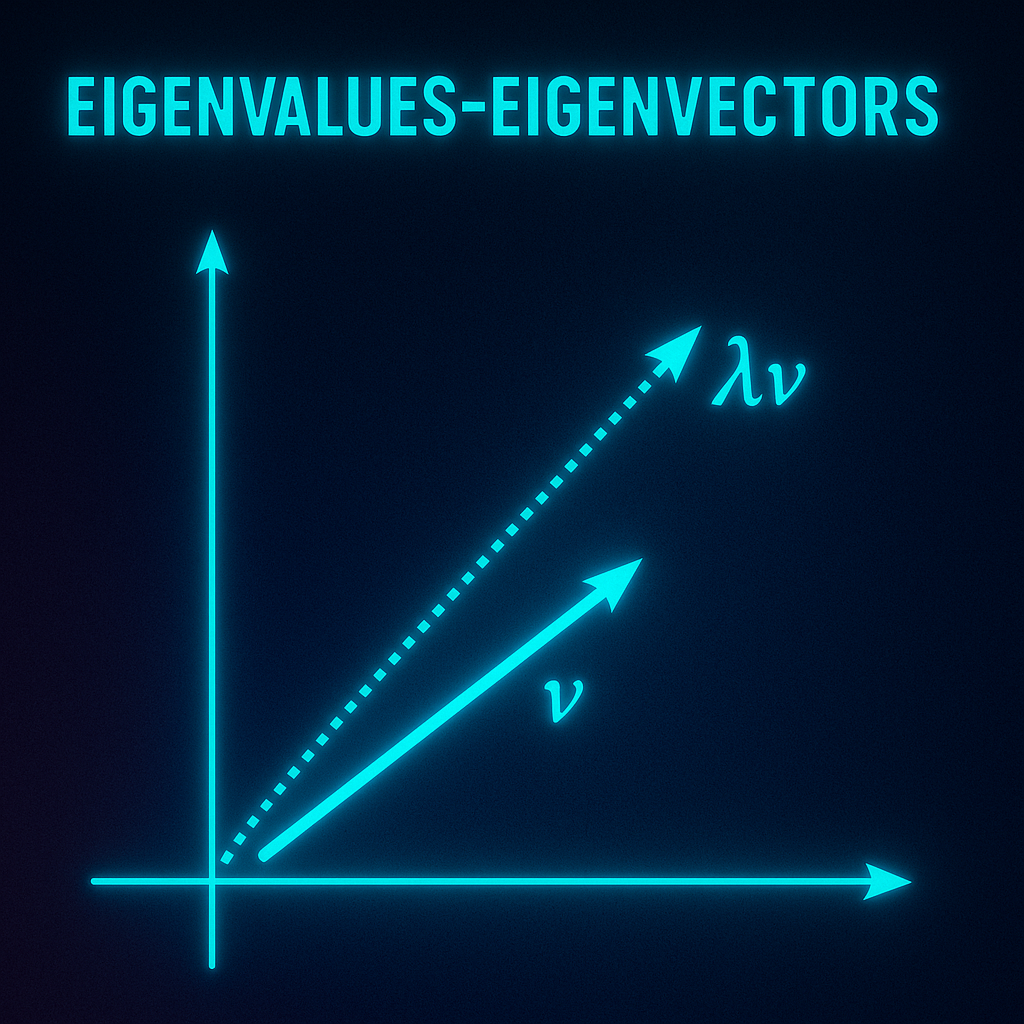
Eigenvalues and Eigenvectors: The Hidden Patterns Behind Everything
Discover how eigenvalues and eigenvectors reveal the hidden structure in data, power Google's search, and explain quantum mechanics.

Vector Spaces Demystified: From Abstract Theory to Geometric Intuition
Master vector spaces with geometric intuition and concrete examples. Understand why they're the foundation of machine learning, computer graphics, and quantum mechanics.
Experience the Future of Learning
Join thousands of students already learning smarter with Didaxa's AI-powered platform.